
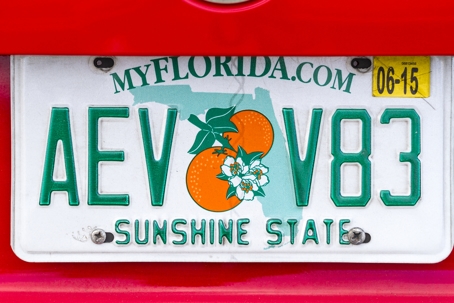
Beware: The Frame You Love May Create Legal Trouble
At Bogle Law, P.A., our guiding principle is five lawyers, one mission—we provide high-quality, professional legal service and help our clients and community understand how changes in the law can affect everyday life.
One recent change in Florida law does exactly that, and it involves something many drivers never think twice about: license plate frames.
What Changed—and When?
During the 2025 Florida legislative session, lawmakers amended Florida’s license plate laws through House Bill 253. Effective date: October 1, 2025.
Florida Statutes §§ 320.061 and 320.062 are fully in effect and enforceable statewide.
What Florida Law Now Requires
Florida law now requires that all parts of a vehicle’s license plate be fully visible and readable at all times, including the letters and numbers, the registration (validation) sticker, and other identifying features of the plate.
The statutes prohibit attaching or applying anything that interferes with that visibility. This includes common items such as decorative license plate frames, clear or tinted plate covers, and sprays or coatings marketed as protective.
Importantly, the law does not require intent. A driver does not have to be trying to hide a license plate for a violation to occur.
Why This Matters More Than People Realize
Many of these frames and covers are sold openly and have been used for years without issue. However, under the updated law, something as simple as a favorite school or sports team license plate frame can expose a driver to more than just a warning or a ticket.
Because certain violations of Florida’s license plate statutes are classified as criminal offenses, what feels like a harmless personal touch on a vehicle can, under certain circumstances, result in criminal charges rather than a simple traffic citation.
Quick Check: Is Your License Plate Compliant?
☐ Can you clearly see every letter and number on the plate?
☐ Is the registration (validation) sticker fully visible?
☐ Is there no frame or cover touching the letters, numbers, or sticker?
☐ Is the plate easy to read from different angles?
☐ Is there no tinted or clear cover over the plate?
☐ Are there no sprays, coatings, or overlays applied to the plate?
If you answered “no” to any of these questions, your license plate may not comply with Florida’s updated law that took effect October 1, 2025.
When it comes to license plates, simpler is safer.
Disclaimer
This blog post is provided for general informational purposes only and is not intended to be legal advice. Reading this article does not create an attorney-client relationship. Laws and their application may vary depending on individual circumstances.
If you’ve been cited or charged under Florida’s updated license plate laws, don’t navigate the process alone. Contact Bogle Law, P.A. to schedule a consultation with an experienced attorney.